Guide to the Chicago Marathon Course 2027
A mile-by-mile breakdown of the Chicago Marathon course
2027 course changes, if any, haven't been announced.
Aid Stations & Course Detail
Course Preview & Strategy
Course Overview
The Chicago Marathon covers 26.2 miles (42.195 km) through 29 neighborhoods on a fast, mostly flat course. As one of the World Marathon Majors, the Bank of America Chicago Marathon consistently ranks among the fastest marathon courses in the world. The loop takes runners across Chicago's North, West, and South sides before returning to Grant Park.
Course Profile
🌤️ Plan for Race Day Weather
Check out race day weather going back to 2007 to help you plan your race strategy, pacing, and what to wear.
View Weather History & Planning Guide →🏆 Chasing a Boston Qualifier?
Chicago is one of the best BQ courses in the world. Learn how qualifying works, what times you need, and how to register with your Chicago result.
Read the Boston Qualifying Guide →Elevation Profile
The honest version of "flat"
The Chicago Marathon has a total elevation gain of around 210 feet across 26.2 miles. That's less than most parking garages. But flat doesn't mean perfectly level, and knowing where the grade changes are will help you run smarter.
Start to Wacker (~mile 0.25): A gradual uphill out of Grant Park. Easy to miss at race pace, but it's there. Don't let it pull your effort up early.
Wacker to Grand (~mile 0.75): The course drops off the river bridge toward Grand Avenue. A noticeable downhill. Let it carry you, don't chase it.
Halsted overpass (~mile 17): A short climb that barely shows up on an elevation chart. If your legs are starting to go, you'll feel it.
Cermak Road Bridge (~mile 21): A bridge overpass heading into Chinatown. It doesn't look like much. At mile 21 it's a different conversation. Shorten your stride and don't fight it.
Roosevelt Road (~mile 26): About 25 feet of climb in the final half-mile. At this point in the race it feels like a mountain. It isn't. Crest it and you're done.
Everything else is genuinely flat. Miles 6 through 20 are as close to pancake-flat as city running gets.
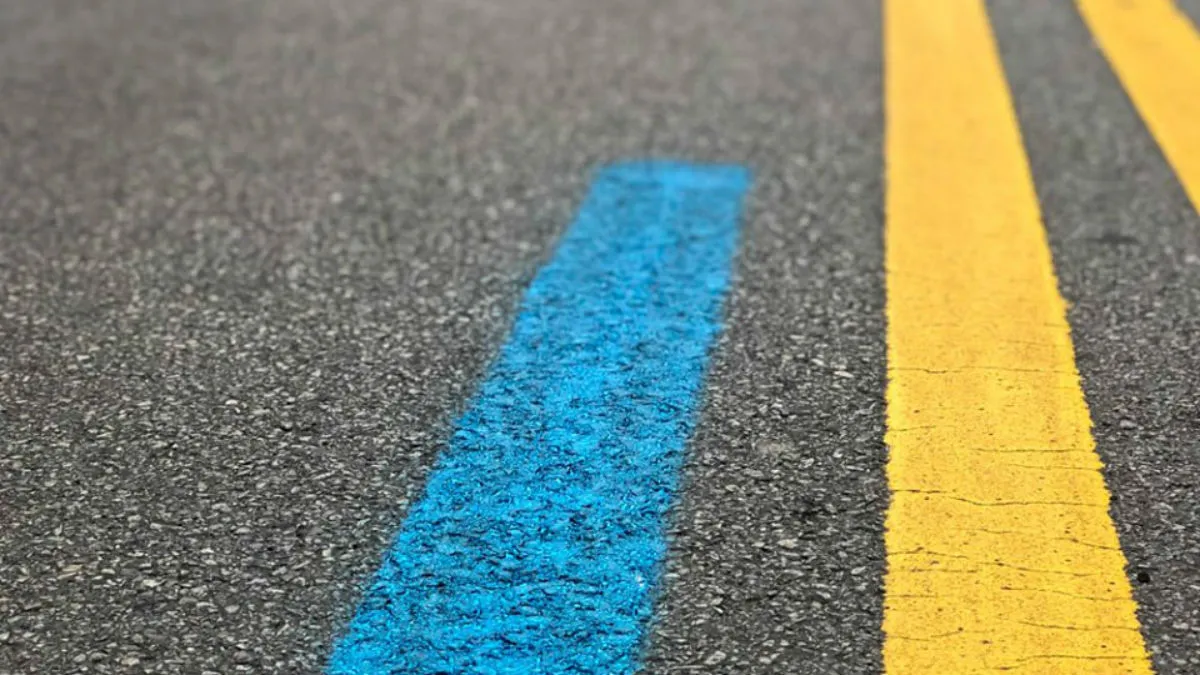
The Blue Line
The blue line painted on the road marks the IAAF-certified shortest route, exactly 26.2 miles if you follow it perfectly. Don't follow it perfectly.
The line gets crowded, especially in the first few miles when everyone is jostling for position. Stay near it, take turns on the inside, but don't weave through runners to hug it. Every time you swing wide around a pace group or drift to grab water, you're adding distance. Most runners finish with 26.4 to 26.6 on their watch. Some see 26.8. That's the cost of not running tangents.
Practical approach, don't obsess over the line itself, but be intentional on turns. Cut the apex, stay left where the course bends left, and slow down before aid stations rather than weaving through them at speed.
Want the community's take on running Chicago? See what r/ChicagoMarathon is talking about this month in the Reddit Round-Up.
Mile-by-Mile Breakdown
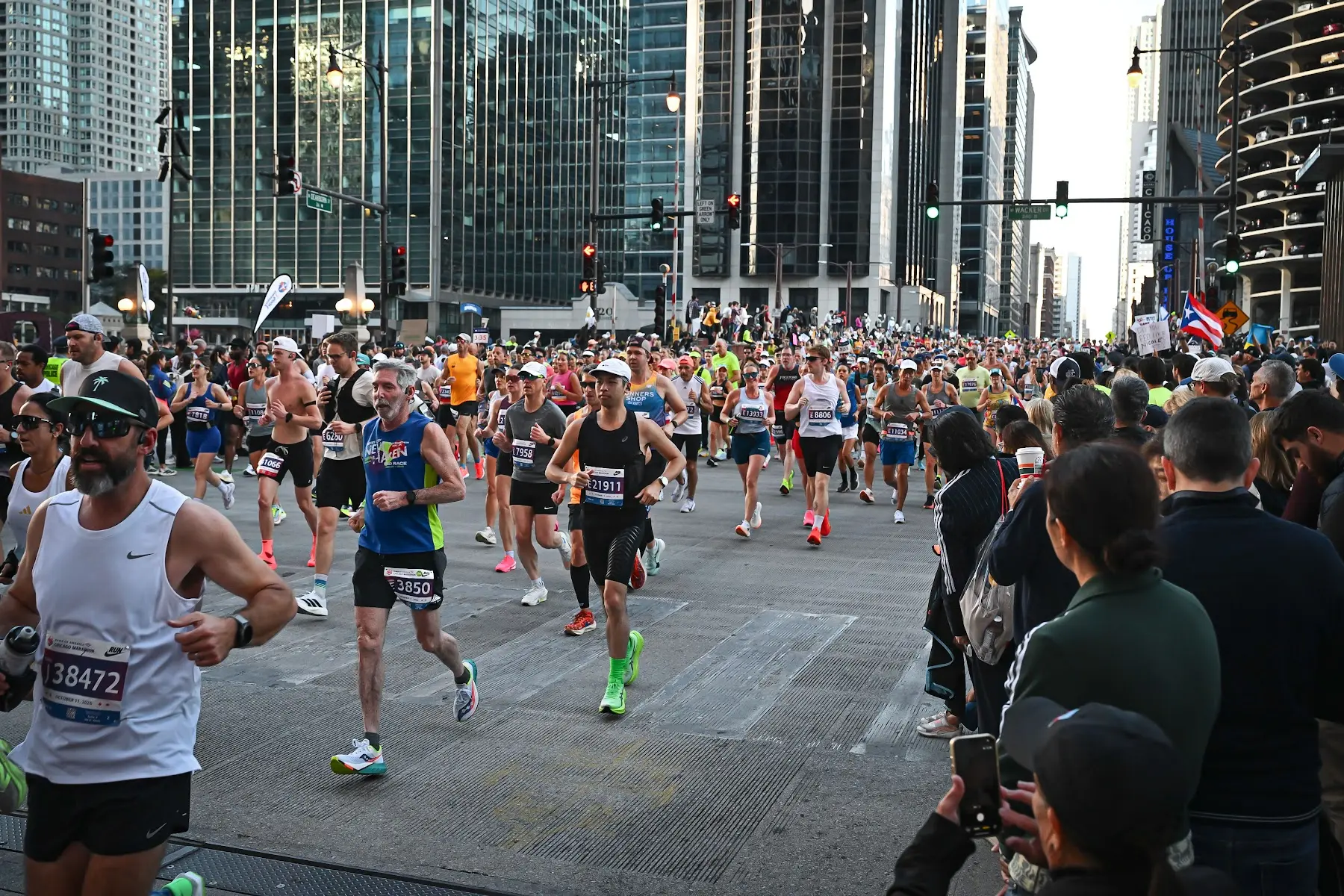
Miles 1-4: Grant Park to River North
The early miles zig-zag through the Loop. You cross the river three times and the streets are tight. Manual splitting is your friend here if you care about clean data.
Mile 1: Slow and crowded.
Miles 2-3: Slightly downhill but noisy enough to pull you faster than you think.
Mile 4: Out of the Loop and heading toward River North, finally getting more space around you.
In 2026 the course turned onto Dearborn instead of State. It was a little more crowded heading into the first aid station, but coming out of Lower Wacker, people were already several deep on Grand, Dearborn, and LaSalle. By the 5K mark they were lining both sides of the street and the center islands.
Lower Wacker was better than I expected in 2026. My first mile lap was only about 0.08 miles off, compared with about 0.3 at the Shamrock Shuffle. Instant pace was still useless.
Strategy: Don't react to any watch pace until you're out of downtown. Trust effort.
Miles 5-7: Old Town, Lincoln Park & Inner Lake Shore Drive
Old Town and Lincoln Park are steady and comfortable, and your GPS pace starts behaving again. Parts of Old Town can act like a wind tunnel depending on the direction, so be ready for a quick headwind bite here.
Then the crowds start to thin out. Inner Lake Shore Drive around mile 7 is the first real sun exposure of the day. The buildings fall away to the east, and on a clear morning the whole stretch is in direct sun. That's where I first felt the heat in 2026.
Strategy: Use the quiet to settle in. If your heart rate is already climbing here, that's your cue to back off, not later.
Miles 8-10: Wrigleyville, Lakeview & Boystown
The turn from Sheridan onto Broadway around mile 8 flips a switch. Wrigleyville, Lakeview, and Boystown are packed with people. Bars, sidewalks, balconies, everywhere. It's so much fun, and the energy is electric. That stretch carries you almost all the way back toward Old Town.
Strategy: The crowds make it easy to get carried away. Keep your early pacing honest.
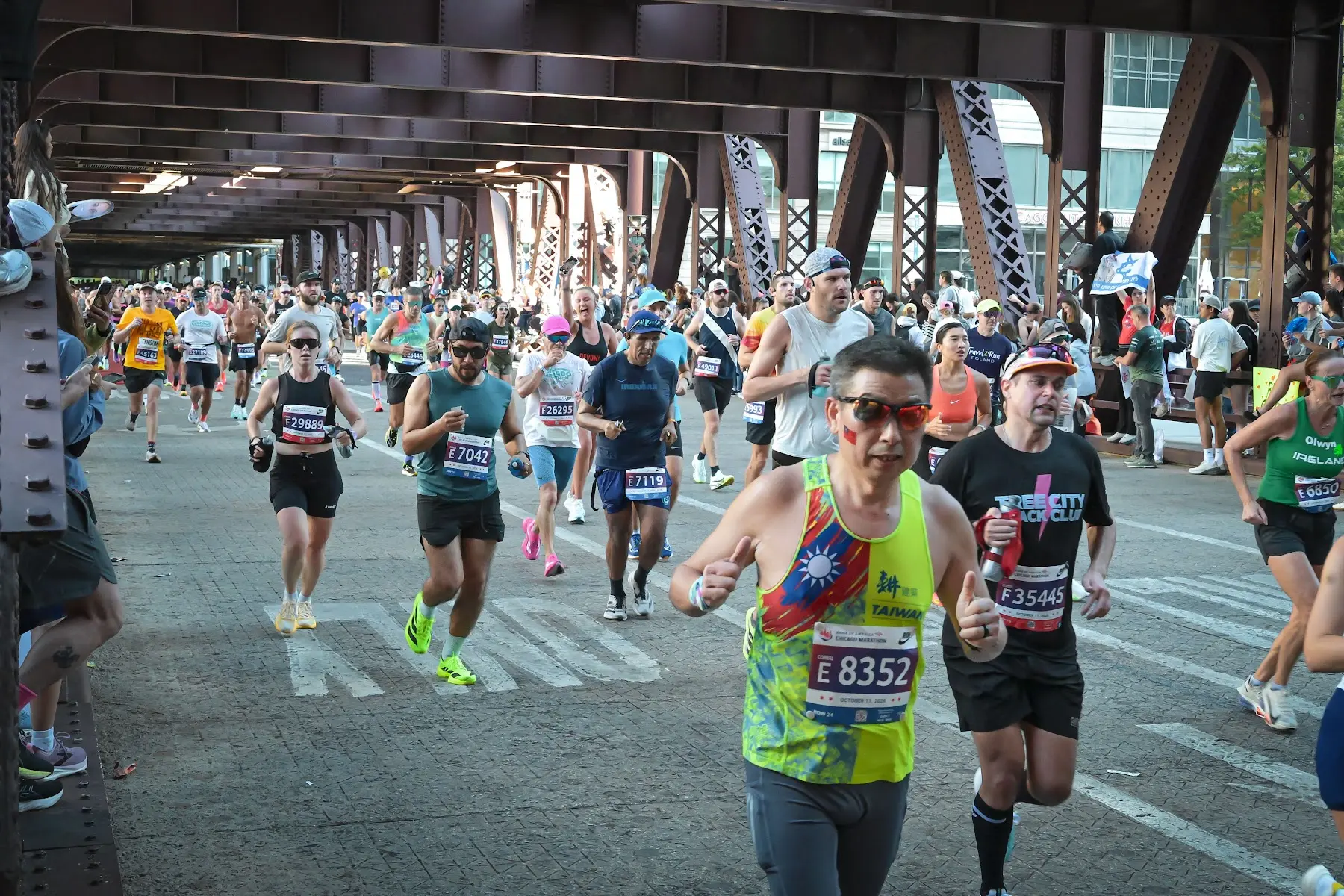
Miles 11-13: Wells to River North to Loop
You run south on Wells (mile ~11), and the cheering stays strong. Tall buildings start creeping back in, and so does the wind. If it's gusty on race day, this stretch will remind you.
As you re-enter downtown around miles 12-13, your GPS falls apart again. Expect skyscraper interference until you're out west later.
Halfway comes around the river. It'll be loud and chaotic, and you'll feel better here than you should.
Approaching halfway in River North, crowds were five to seven deep in 2026, and the cheer zone near Wacker was one of the loudest spots I remember.
Strategy: Hit halfway on plan, not ahead of it. The marathon doesn't care how good you feel here.
Miles 14-16: West Loop & Greektown
The shift is noticeable. The cheering drops off, shade disappears, and it gets sunny and exposed. These miles used to be the worst pavement on the course, but they repaved it recently so footing is way better now.
When you reach the West Side turnaround, you can see Sears Tower straight ahead. It becomes your visual anchor for miles.
Past the United Center around 25K, shade gets hard to find, and Jackson heading east puts you straight into the sun.
Strategy: These miles aren't glamorous, but they're important. Stay on top of fueling and keep your effort steady.
Personal note (2024): Aid stations hit every mile, but don't treat them as a cue to drink big. I made the mistake of stopping at mile 19 and downing 2-3 full cups. My stomach wasn't ready for it. Small sips, keep moving.
Miles 17-18: Little Italy, UIC & Medical District
Quieter miles. The pavement is smoother now, the crowds thin out, and this is where your legs start to negotiate with you.
This area doesn't have tall buildings, so no watch interference, but it's sun-exposed and can feel warmer than expected.
The Halsted overpass around mile 17 is small, but it gets your attention on tired legs.
Strategy: Stick to your nutrition plan even if your stomach is starting to complain. You'll need it.
Personal note (2026): This is where my race came apart. My quads, hamstrings, and glutes started hurting around 17, and by 18 running hurt more than walking. Looking back, the warning sign wasn't my pace. It was my heart rate, already at 153 by mile 4.
Miles 19-20: Pilsen
A huge mood shift. Pilsen hits you with color, music, families, and some of the most genuinely uplifting support of the entire race.
This is the last section where the boost is real.
Strategy: Use the energy emotionally, not physically. No pace surges here.
Personal note (2024): This is where the boost is real and I needed it. After a rough aid station stop at mile 19, I was walking and struggling. The Pilsen crowd pulled me back. Lots of strangers calling out "you got this" and meaning it. I don't know if I finish without that stretch.
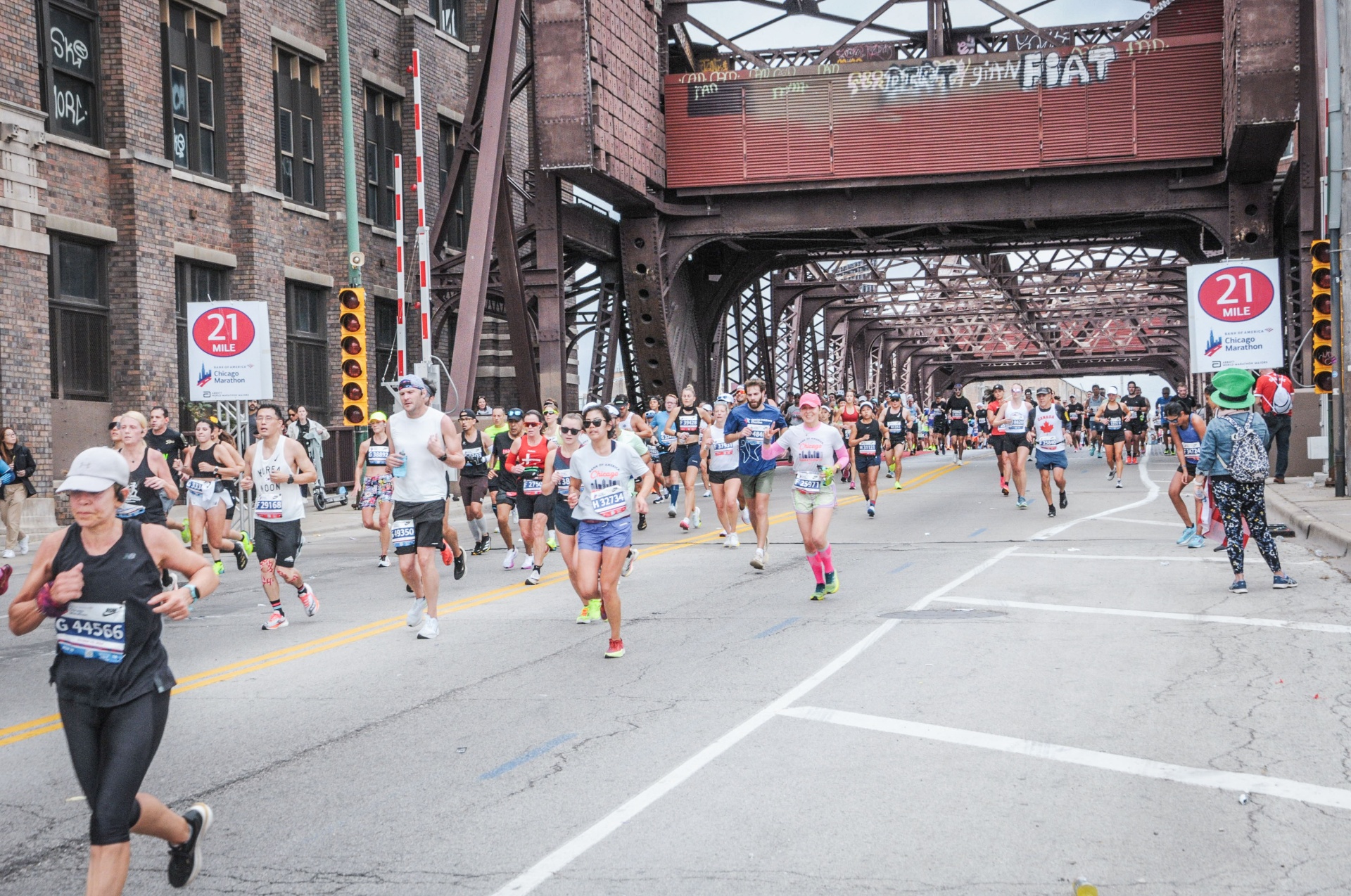
Mile 21: Chinatown
You pass through an almost 180 degree turn heading into Chinatown. It's short, loud, and filled with people. The Chinatown Gate is a great mental checkpoint.
The turn onto Wentworth at the arch might be the loudest corner on the course. In 2026 people were 10 to 15 deep. But it's really just that corner. The crowd fades fast once you're past it.
Strategy: Break things into tiny segments from here on out. Don't think about the finish yet.
Miles 22-23: Armour Square, IIT & Bronzeville
It gets quiet again. Not much shade, not many spectators. You pass through Armour Square, then IIT, then into Bronzeville. This is the part where Floberg said "a dark, dark place," and that's not wrong.
Strategy: Aid stations only for walking if you need it. Keep your head locked into the next mile marker, nothing more.
Personal note (2024): This is the hardest stretch on the course. The crowds disappear, the shade disappears, and your legs start doing math you don't want to hear. I saw a woman receive medical attention at mile 22, a reminder that the race is serious and the back half demands respect. By the south turnaround at mile 23 I'd found a shuffle pace two minutes slower than goal. At that point it stops being physical. It's just mental.
Miles 24-25: Michigan Avenue (Southbound then Northbound)
This section is one of the hardest: Southbound Michigan (mile 23-24ish) is desolate and honest. Northbound Michigan (25ish) is where the crowds return and the city starts pulling you back home.
There is a tiny incline on Michigan that doesn't look like much but absolutely feels like something.
South of 26th Street is the toughest mental stretch of the race. You're running away from the finish while watching runners head back north, and late in the morning the sun is right overhead.
Strategy: Short stride, calm breathing, one block at a time.
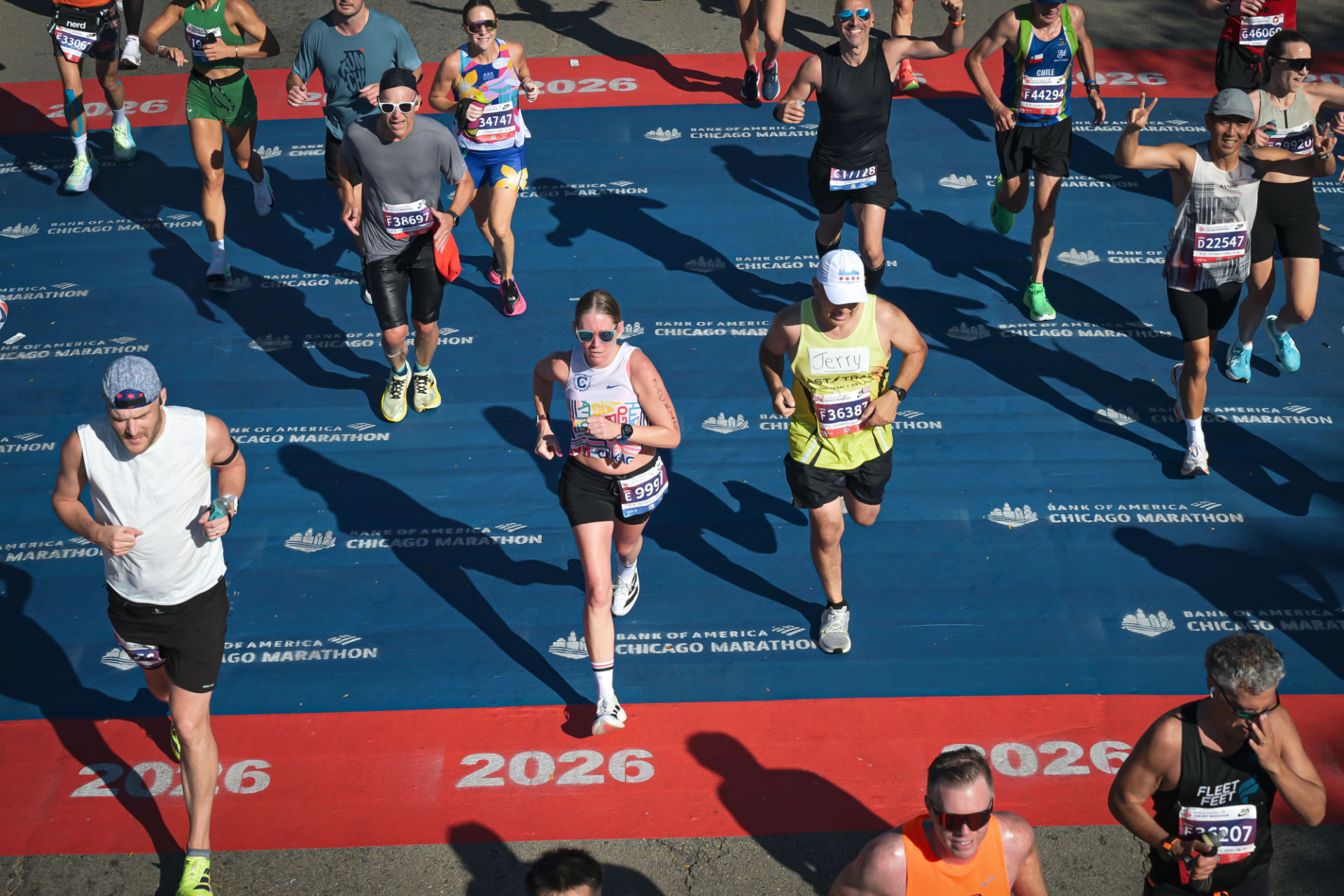
Mile 26-Finish: Roosevelt to Columbus
Roosevelt's hill is only about 25 feet of elevation, but at this point it's a mini-Everest. Once you crest it, you turn onto Columbus and the finish is right there.
The Reddit consensus on Roosevelt, short, choppy steps up the incline rather than trying to power through it. Don't look at your feet, look at the spectators, who are loud here. Once you crest it and turn left onto Columbus Drive, you have less than 200 meters to the finish. Whatever is left, spend it.
Strategy: Whatever is left, spend it.
Critical Course Factors
Weather Variables
Temperature: October in Chicago averages 45-65°F (7-18°C) at start time. Ideal marathon weather, but prepare for anything from cold to warm.
Wind: The "Windy City" nickname is real. Prevailing winds typically create headwinds on the return north (Miles 20-26). This can add 3-5 minutes to finishing times on very windy days. Train for mental toughness in adverse conditions.
Sun Exposure: Downtown offers shade from buildings. North Side and southern stretches are more exposed. Wear sport sunscreen regardless of cloud cover.
View Weather History & Planning Guide →GPS Watch Issues
Downtown skyscrapers (Miles 1-5, 24-26) create "urban canyons" that block GPS signals. Your watch may show:
- Mile 1: 1.15 miles
- Total distance: 26.5-26.8 miles
Solution: Trust the official mile markers on the course, not your watch. Calibrate your effort by perceived exertion and race plan, not GPS pace.
For the watch I use and how I handle GPS gaps on the course, see the gear page.
Read the Watch Tech Guide →Hydration & Fueling
Aid Stations: Every mile starting at Mile 2
- Left side: Gatorade Endurance Formula
- Right side: Water
- Gel Stations (Maurten): Miles 12.5, 15.7, and 18.2
- Biofreeze Pain Relief: Mile 21.3
Water refill stations (2026): Culligan refill stations sat at about miles 5.7, 10.1, 16, and 20.5, with around 30 spigots each. I filled my handheld in about two seconds and lost roughly 10 seconds per stop. If you carry a bottle, they're the best addition to the course in years. They haven't been confirmed for 2027 yet.
Maurten is the official race gel, but I use BPN.
The Gatorade Endurance on course has significantly higher sodium content than standard Gatorade. If you haven't trained with it, your stomach may not be ready for it in volume. It's worth trying it before race day — you can pick some up here to practice with on long runs. Small sips, keep moving.
The Biofreeze station at mile 21.3 is staffed by volunteers with gloves who apply it liberally. It feels like a miracle for about ten minutes. If you want to try it before race day, you can grab some here. Do not touch your face after passing through. Seriously.
Strategy:
- Practice grabbing cups while running during training
- Don't skip early stations even if you're not thirsty
- Aim for 4-8 oz of fluid every mile
- Take your first gel at Mile 6-8, then every 45 minutes
Pacing Strategy
The Chicago course is deceptively flat. The lack of hills makes it easy to run too fast early. Here's the brutal truth:
- Start 15-20 seconds/mile slower than goal pace (Miles 1-5)
- Settle into goal pace (Miles 6-18)
- Maintain at all costs (Miles 19-23)
- Survival mode (Miles 24-26)
On warm days, pace by heart rate, not the watch. If your heart rate is climbing early at goal pace, slow down then, not at mile 18.
Negative Split Goal: Nearly impossible in a marathon. Aim for an even split with no more than a 5-minute difference between halves.
Crowd Strategy
Use the crowds as fuel:
- High-five kids for instant energy boosts
- Read signs when you need distraction from pain
- React to cheers to stay present and engaged
- Remember: Strangers are giving up their Sunday to scream your name (literally, so put your name on your shirt)
Mental Game Plan
The 4-Quarter Strategy
When It Gets Hard (and it will)
- Count to 100, then start over
- Focus on perfect form for 1 minute at a time
- Pick someone ahead and reel them in
- Remind yourself: "I've trained for this moment"
- Think about why you're doing this. Your reason is bigger than your pain.
Pre-Race Checklist
Course Reconnaissance
- Study the map thoroughly
- Identify where your spectators will be
- Note bathroom locations (every mile starting at Mile 2)
- Plan your fueling timing based on aid station locations
Practice Runs
- Do long runs at marathon effort, not easy pace
- Practice fueling every 45 minutes during 18+ mile runs
- Simulate race morning: same wake time, same breakfast, same routine
- Tape any problem areas with KT Tape -- knees, IT band, or anywhere that's given you trouble in training
Race Morning
- 2027 start and corral close times haven't been announced. See how 2026 worked on the Race Day Cheat Sheet
- Check bag by 7:00 AM (gear check closes early)
- Use the porta-potties near your corral (lines are long)
- Apply Squirrel's Nut Butter to any chafe-prone areas before you leave the hotel
- Use a FlipBelt to carry gels and your phone under your throwaway layer, never under your bib
Calculate Your Race Splits
Use our pace calculator to calculate mile-by-mile splits based on your goal time. Plan your pacing strategy and know exactly what time you should hit at each mile marker.
Open Pace CalculatorFinal Words
The Chicago Marathon will hurt more than you expect and take longer than you hope. That's not a warning, it's just true.
But somewhere around mile 22, when your legs are doing math you don't want to hear and your brain is negotiating surrender, something shifts. You're running through 29 neighborhoods with a million strangers cheering for you by name. That's not a race. That's something else entirely.
See you at the finish line.