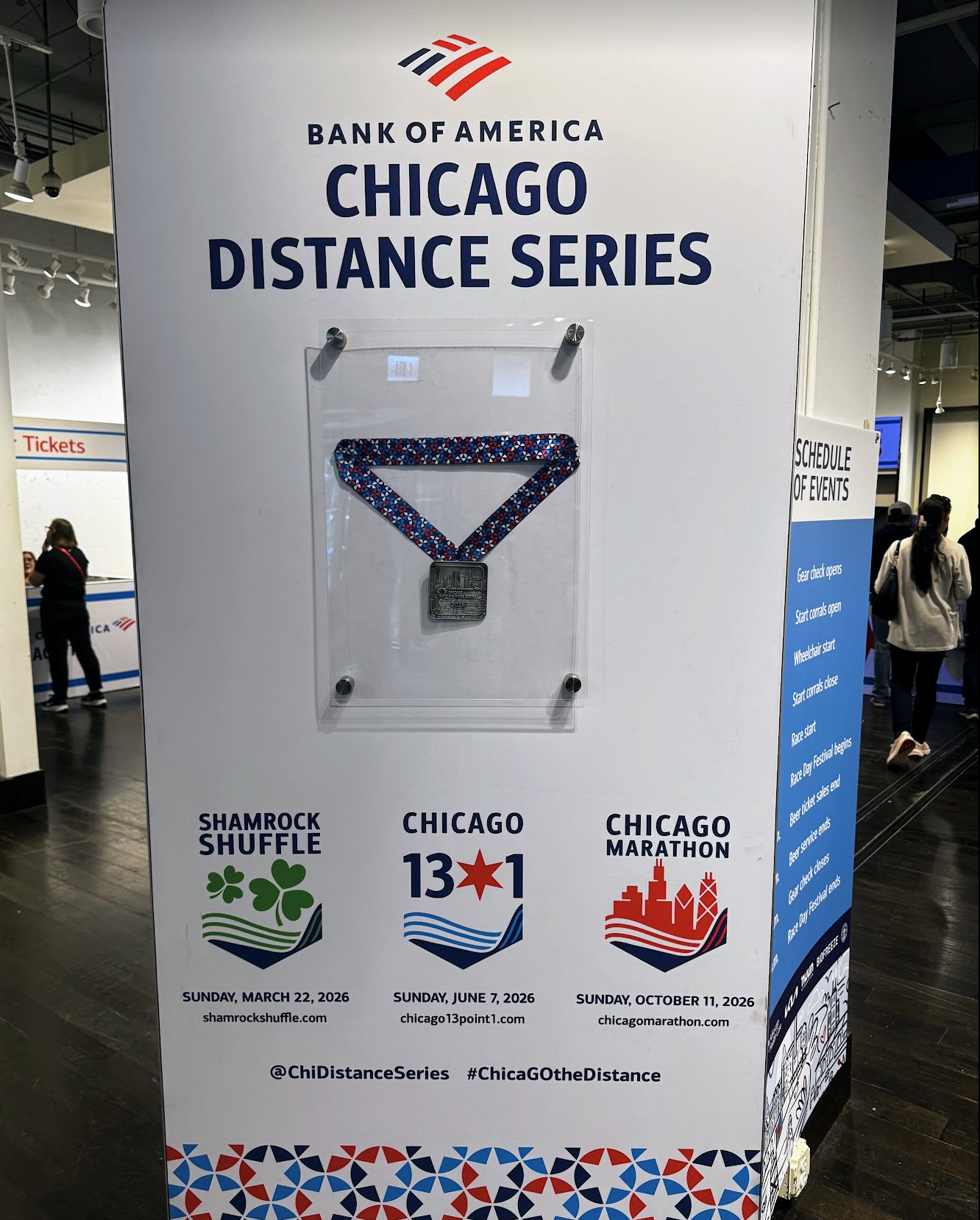
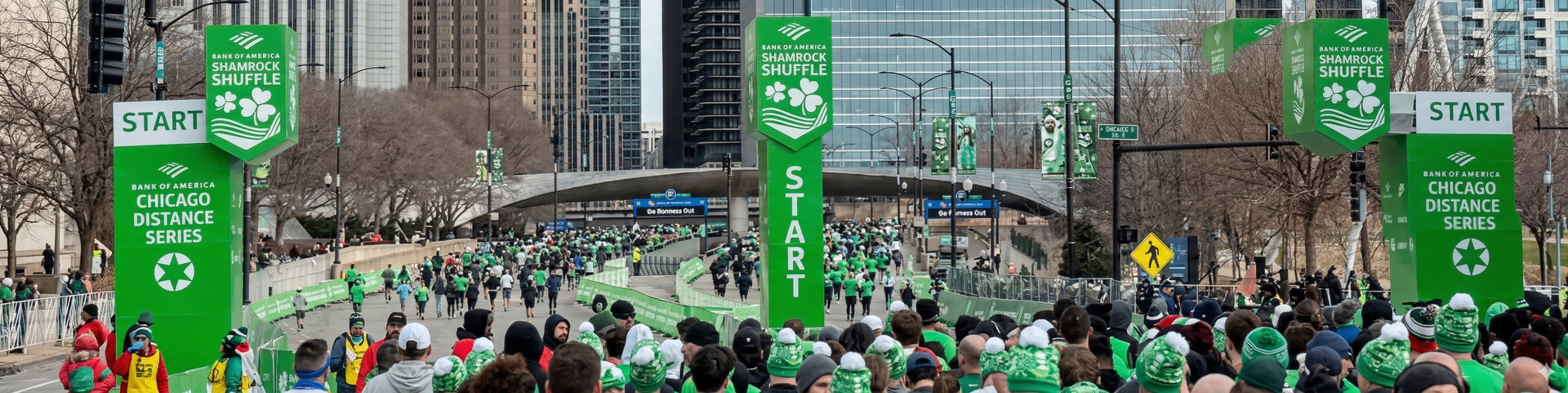
The Bank of America Chicago Distance Series ties together three major races in one season: the Shamrock Shuffle 8K, the Chicago 13.1, and the Chicago Marathon. For 2027, the dates are: Shamrock Shuffle 8K on Sunday, March 21, 2027, Chicago 13.1 on Sunday, June 6, 2027, and the Chicago Marathon on Sunday, October 10, 2027.
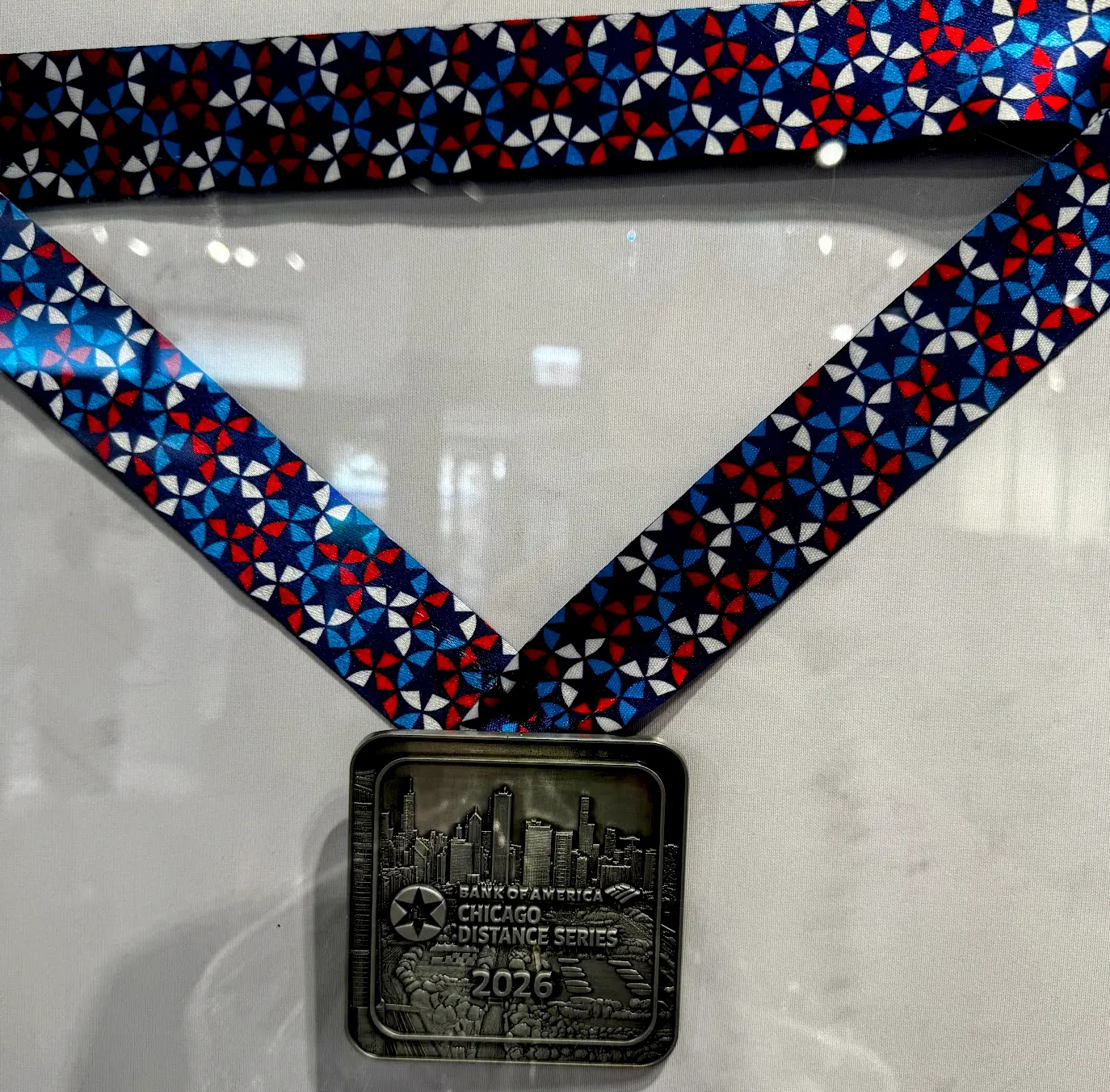
If you finish all three 2027 events as part of the Distance Series, you earn a special Distance Series medal and a guaranteed entry into the 2028 Bank of America Chicago Marathon, the race's 50th running. That is a big deal if you want to avoid lottery stress and know your spot is locked in for the following year.
If you finished the 2026 series, your guaranteed 2027 entry email went out Tuesday, October 13 from chicagomarathon@info.letsdothis.com. The link is personal. Claim your entry before applications close October 29 at 2:00 PM CT, and pay by November 10. Didn't get it? Check spam and junk first, then email office@chicagomarathon.com.
Already planning next season? Registration for the 2027 Shamrock Shuffle 8K and Chicago 13.1 is open now. Sign up early to lock in your entry before each event sells out.
Running the 2027 series still requires your own 2027 marathon entry. See every way to get in on the registration guide.
Learn more about the Chicago Distance Series →
Why Chicago Runners Have It Made
Most marathoners face a lonely eighteen week grind from decision day to race day. Chicago runners get something better: a year round race calendar that flows straight into marathon training and keeps you honest the whole way.
The Bank of America Chicago Distance Series is not just a marketing label. It really is how a lot of local runners shape their whole season. These three events are natural stepping stones that build fitness and confidence for October.
How the Series Works
Three races, one clear goal: get you to the Chicago Marathon start line fitter, calmer, and more prepared than you have ever been.
- Shamrock Shuffle 8K - Sunday, March 21, 2027: Season kickoff and winter fitness check in downtown Chicago.
- Chicago 13.1 - Sunday, June 6, 2027: Early summer half marathon that sits eighteen weeks before marathon day.
- Bank of America Chicago Marathon - Sunday, October 10, 2027: The main event through the streets of Chicago.
Finish all three races in 2027 and you complete the Chicago Distance Series, which gives you a unique Distance Series medal and guaranteed entry into the 2028 Chicago Marathon.
Instead of one huge goal far in the future, you always have another race on the horizon. That structure helps with motivation, pacing practice, nutrition testing, and nailing the logistics long before marathon day.
Shamrock Shuffle 8K
The season opener
After months of indoor miles and dark winter runs, Shamrock is your wake up race. It turns the city into a giant running party and marks the unofficial start of Chicago running season.
Where it fits in your year:
- Fitness checkpoint: See what your winter base work actually did for you.
- Rust buster: Remember how to race again after a long off season.
- Pacing data: Your 8K effort gives a rough early picture of where your marathon goals might land.
- Community reset: You jump right back into the local running scene.
Mileage leading in:
- Eight to twelve weeks of base building through winter.
- Peak week around twenty five to thirty five miles, or less if you are newer.
- One faster workout per week plus mostly easy miles.
- Focus on consistency, not hero workouts.
How to use it for the marathon:
- Treat the result as a snapshot of where you are now, not where you will be in October.
- Use the time to set realistic goals for your spring half marathon training.
- If the race goes great, you know your base is solid.
- If it feels rough, that is good feedback. Adjust your spring plan and keep building.
Most people go out too hot here. Aim for a strong but controlled effort, not a full send. Your real goals live in June and October.
Spring Half Marathon Block
Shamrock rolls right into spring half marathon training. This is where you convert winter base into real racing fitness.
What this block looks like:
- Eight to twelve weeks of structured half marathon training.
- Peak weekly mileage around thirty five to fifty miles depending on experience.
- One tempo or interval workout per week, one long run, and the rest easy.
- Build up to a two hour long run if you are aiming for a solid half marathon.
Why it matters for marathon training:
- You are stacking another twelve weeks of consistent training on top of your winter work.
- You learn how to do workouts and manage fatigue without blowing up.
- Your aerobic system gets stronger and more efficient.
- You show up to marathon training in June already fit instead of starting from scratch.
A lot of Chicago runners target races like the Illinois Half Marathon, Soldier Field Ten Mile, or other spring events. The specific race does not matter as much as keeping the momentum rolling from Shamrock to Chicago 13.1.
Do not treat every spring race like a PR attempt. Pick one to race hard and use the others as supported long runs or tempo efforts. Save your best work for Chicago 13.1 and the marathon.
Chicago 13.1
The perfect test run
Chicago 13.1 happens exactly eighteen weeks before the Chicago Marathon. That timing is not an accident. It gives you a real race effort right before you start your marathon specific training block.
Why this race is critical:
- Marathon predictor: Your half marathon time gives a realistic picture of where your full marathon fitness might land.
- Gear test: Try your shoes, outfit, hydration vest, and fuel strategy in race conditions.
- Pacing practice: Learn what goal marathon pace feels like when you are already tired.
- Logistics rehearsal: Navigate downtown Chicago on race morning and figure out your transportation plan.
- Mental checkpoint: Finish feeling strong and confident, or identify what needs to change before October.
How to race it:
- Go out controlled. Do not blow up in the first three miles because you feel good.
- Run the middle miles at your goal marathon pace or slightly faster.
- Push the last 5K if you have it in you, but do not destroy yourself.
- This is a tune up for October, not your final exam.
What to do after:
- Take a full recovery week. Easy miles only, no workouts.
- Review what worked and what did not. Adjust your marathon plan accordingly.
- Use your half marathon time to set realistic marathon goals. Most calculators will give you a ballpark estimate.
- Get ready to start the real marathon training block in mid June.
Treat this race like a dress rehearsal. Wear what you will wear in October. Eat what you will eat in October. Follow the same pre-race routine. The goal is to remove as many unknowns as possible before marathon day.
The Full Picture
When you step back and look at the whole Distance Series, you see a clear training arc:
- January to March: Build your base and get ready for Shamrock.
- March to June: Train for a spring half marathon and peak at Chicago 13.1.
- Mid June to October: Lock in for the full eighteen week marathon build.
That is nine months of structured, purposeful training with built in checkpoints along the way. You are never grinding aimlessly. You always have a target race on the calendar and a clear reason to keep showing up.
The Bank of America Chicago Distance Series is not just three races. It is a full season training plan disguised as a race series. If you run all three events, you earn a special medal and guaranteed entry into next year. But more importantly, you show up to the marathon start line with nine months of fitness, three races worth of experience, and the confidence that comes from knowing you did the work.
Most marathoners hope they trained enough. Chicago Distance Series runners know they did.
The Distance Series Medal
Finish all three events (Shamrock Shuffle 8K, Chicago 13.1, and the Chicago Marathon) and you earn a special Distance Series finisher medal. It's separate from your individual race medals and only goes to runners who complete the full series in a single year.
The medal is handed out at the Chicago Marathon finish line, after you cross your third and final race. You don't need to do anything extra to claim it. Your timing chip tracks all three finishes automatically.
Beyond the medal, completing the series locks in guaranteed entry to the following year's Chicago Marathon. No lottery, no waiting. Your spot is confirmed.
Here is how the guaranteed entry works: finish the 2027 Chicago Marathon on October 10, 2027 as your third series event, and you will get an email with a personal link to claim your 2028 entry. The race will announce 2028 application dates in fall 2027.