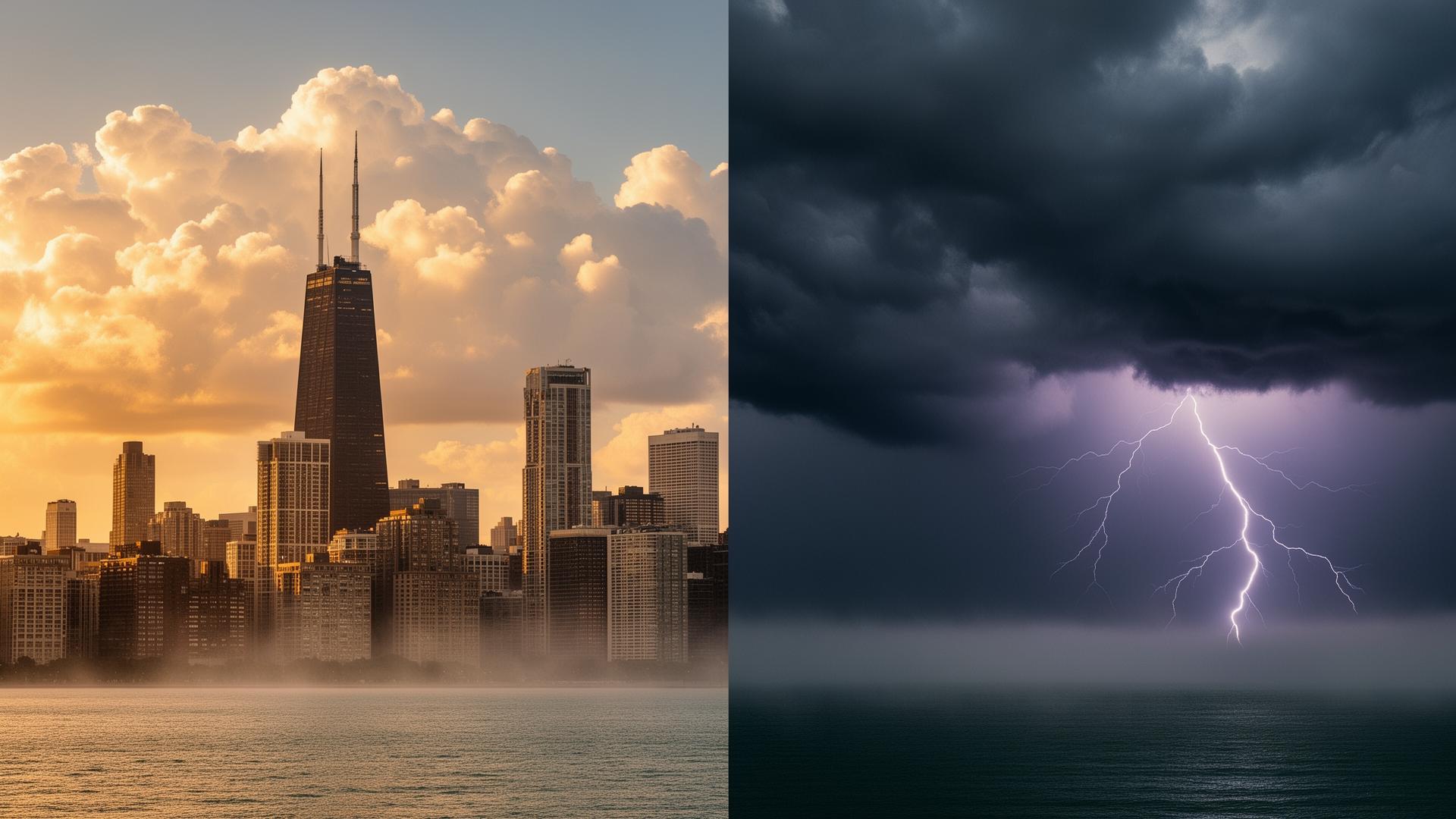
October in Chicago should be perfect for marathoning. The summer heat has faded, the winter freeze has not arrived, and Lake Michigan provides a stunning backdrop. The historical weather data shows most years deliver ideal conditions: temps in the 50s to low 60s, crisp fall air, and clear skies.
But this is Chicago. And sometimes, Mother Nature has other plans.
2007: The Day Chicago Stopped the Marathon
Race Date: October 7, 2007
Temperature at Start: 71°F
High: 88°F
The Outcome: Race shut down after 3.5 hours
Ask any veteran Chicago marathoner about the worst weather race and you will get the same answer: 2007.
It started innocently enough. The temperature at the 7:30 AM start was a warm but manageable 71°F. Organizers prepared. Heat advisories went out. Warnings were posted at the expo. More than 200,000 extra servings of water and Gatorade were added, and the Chicago Fire Department increased medical staffing.
Then the race began. And the temperature kept climbing.
By noon, Chicago hit a record 88°F with oppressive humidity. Forty-five thousand runners were already on course.
The chaos unfolded in waves
Early miles: By Mile 4, runners were encountering empty water cups at aid stations. The combination of heat, humidity, and a massive field stripped stations bare earlier than expected.
Miles 15 to 20: Sirens became constant. Spotters yelled "runner down" through bullhorns. Medical tents overflowed. Suburban ambulances were called in to help.
The shutdown: Around 11:30 AM, just 3.5 hours after the start, race officials made an unprecedented call. Runners who had not reached the halfway point were stopped. Police cars drove the course with loudspeakers announcing the cancellation.
The aftermath: More than 300 runners required medical treatment. Over 180 were hospitalized. One runner, 35-year-old police officer Chad Schieber, collapsed and later died. His death was attributed to a preexisting heart condition, not heat illness.
For runners, the experience was chaotic and uneven. Some at Mile 23 were told to walk it in, just three miles from the finish. Others pushed past barricades and finished anyway. Many runners farther back learned the race was canceled from handwritten signs held by confused spectators.
The controversy deepened when race director Carey Pinkowski initially deflected responsibility, suggesting runners used too much water to cool themselves. The response sparked outrage across the running community.
The 2007 Chicago Marathon became a watershed moment for race safety. It showed that even extensive planning can fail when conditions turn extreme. And it proved that 88°F in October, survivable on paper, can become dangerous over 26.2 miles.
2009: The Polar Opposite
Race Date: October 11, 2009
Temperature at Start: 28°F
High: 45°F
The Outcome: Cold, but the race went on
Two years later, Chicago delivered the complete opposite.
Runners woke up to a 28°F start, the coldest in modern Chicago Marathon history. In Grant Park, runners shuffled in place wearing garbage bags, fleece pants, and throwaway sweatshirts. Breath hung in the air. Fingers went numb before the gun even fired.
Aid station volunteers struggled to keep fluids from freezing. Gels turned thick. But once the race started, something important happened.
Runners ran well.
Cold and crisp beats hot and humid every time. The conditions were uncomfortable but manageable. You could layer up, keep moving, and generate your own heat. Unlike 2007, the weather challenged runners without overwhelming them.
Same race. Two years apart. A nearly 60-degree swing.
2010: Heat Returns, Just Not That Heat
Race Date: October 10, 2010
Temperature at Start: 59°F
High: 84°F
The Outcome: High dropout rate, slow times
The memory of 2007 lingered in 2010 when Chicago warmed up again.
While not as extreme as 88°F, low-to-mid 80s were still punishing for a marathon. The data reflected it. The average finish time ballooned to 4:43:38, far slower than typical years. Roughly 2,000 runners dropped out, well above normal.
This is the kind of weather that quietly steals your race. Not dramatic enough to stop the event. Not dangerous enough to make headlines. Just hot enough that goal paces fade mile by mile.
Research backs it up. Finish times drop once race-day temperatures exceed 65°F. Above 75°F, the impact becomes severe. At 84°F, you are racing the thermometer as much as the course.
2024: A Perfect Day for Fast Running
Race Date: October 13, 2024
Temperature at Start: Mid-40s°F
High: Low 60s°F
The Outcome: World records and fast times
Sometimes Chicago gets it exactly right.
The 2024 race delivered textbook marathon conditions. Crisp mid-40s at the start. Gradual warming into the low 60s. Partly sunny skies and minimal wind.
The result was historic. Ruth Chepngetich shattered the women's world record, running 2:09:56 and becoming the first woman to break 2:10 in the marathon. The men's race was won by John Korir in 2:02:44.
Fast courses need fast weather. Chicago delivered both.
This is what October in Chicago is supposed to feel like.
What the Weather Data Actually Shows
Looking at historical Chicago Marathon weather patterns, a few trends stand out:
- Typical range: Most years start between 45 and 60°F and warm to 55 to 70°F by midday. That is marathon goldilocks territory.
- The extremes: The coldest start was 28°F in 2009. The hottest start was in the low 70s in 2007. Chicago allows for a massive swing.
- The predictability problem: Chicago has one of the highest standard deviations in marathon weather among major US races. Translation: it is wildly unpredictable. The forecast often looks fine until it suddenly is not.
- Wind: The Windy City nickname becomes real late in the race. Prevailing winds often turn Miles 20 to 26 into a headwind, adding an invisible hill at the worst possible time.
- Precipitation: Rain is rare but not unheard of. The 1906 race was postponed due to rain, the only weather cancellation before 2007.
The Lessons Learned
The 2007 race forced marathon organizers worldwide to rethink safety:
- Expanded medical staffing and cooling zones
- More frequent aid stations
- Real-time weather monitoring with cancellation protocols
- Better mid-race communication systems
- Earlier and clearer hydration guidance
Chicago implemented these changes directly. The race now features roughly 20 aid stations, enhanced medical coverage, and clear escalation plans for extreme conditions.
What This Means for You
You cannot control Chicago weather. You can prepare for it.
- Train in varied conditions. Comfortable runs alone do not prepare you for race day surprises.
- Have a Plan B and C. Your goal pace works at 55°F. What is your plan at 75°F or 35°F?
- Hydrate early and often. By the time you feel thirsty, you are already behind. Start at Mile 2, not Mile 12.
- Watch the forecast during race week. Chicago is unpredictable, but by midweek the picture usually sharpens. Adjust accordingly.
- Remember the weather hits everyone. On bad weather days, the race is not about the clock. It is about adaptation.
The Beauty of Unpredictability
Chicago's weather chaos gives every finish a different meaning.
Finish in 2007 and you survived one of the most brutal marathons ever run. Finish in 2009 and you proved you could endure bone-chilling cold. Finish in 2024 and you chased speed on a perfect fall day.
Every Chicago Marathon tells a weather story. And when you cross the finish line on Columbus Drive, you join decades of runners who faced whatever showed up and ran anyway.
Explore the full weather history and trends, train for everything, hope for perfection, and race regardless.
Because in Chicago, the only guarantee is that there are no guarantees.